
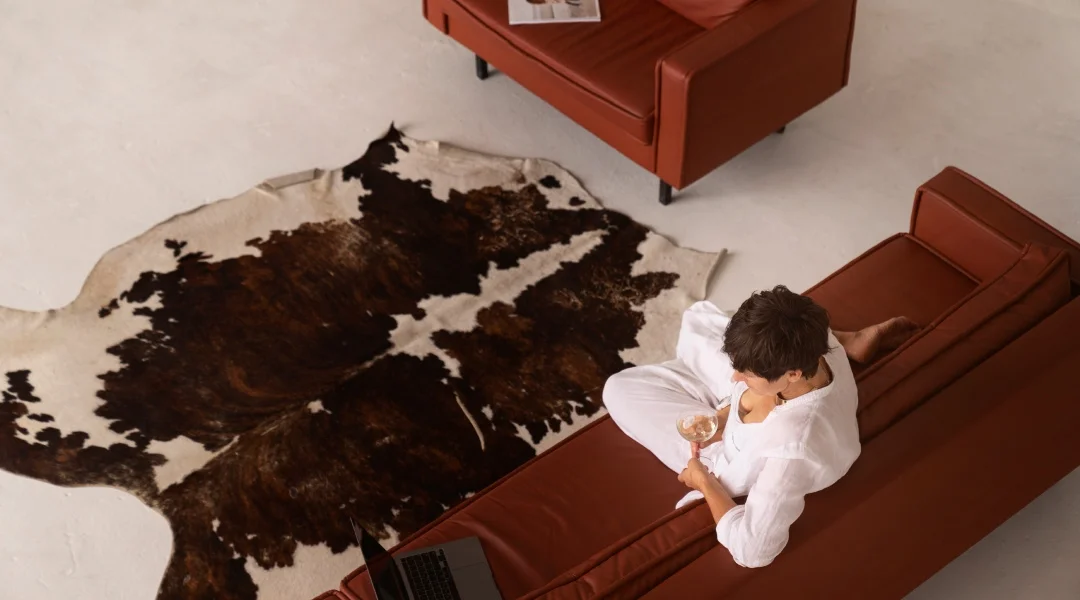
In any interior design project, furniture usually comes first, then paint, and the rug last — as an accessory added once everything else is already in place. That approach tends to produce the weakest results. A rug is the element that anchors a space, defines its zones, tempers its acoustics, and sets the tone for everything around it. Choosing the right rug from the start means building your room on a coherent foundation rather than trying to pull it together after the fact.
At Couper Croiser, a rug is not a finishing product — it is a design material in its own right.
What a rug actually does in a space
It is often seen as purely decorative, but a rug fulfils far more concrete functions in a successful interior design project. The first is acoustic: in spaces with hard flooring — hardwood, concrete, tile — sound travels and layers. A dense rug absorbs footstep frequencies, reduces echo, and creates a calmer, more comfortable atmosphere. In 2026, with the rise of remote work and open-concept layouts, this has become a selection criterion in its own right, in homes and offices alike.
The second function is thermal. A rug creates an insulating layer between the floor and the living space, contributing to a sense of warmth — particularly welcome given the realities of Canadian winters. The third is visual: a rug delineates zones in an open-concept space, organizes furniture around a shared axis, and introduces a colour palette or texture that adds depth to the room.
Custom or standard: what it means for your project

A standard rug works for a standard space. But the reality of interior design in Canada is that few spaces are truly standard — whether it is a living room with an unusual geometry, a commercial entryway that needs to reflect a brand’s identity, or an open office that requires defined zones without partitions.
That is where Couper Croiser’s custom rugs make all the difference. The shape, dimensions, colour palette, and pattern are adapted to the actual space and the specific project — not the other way around. The result is a rug that integrates seamlessly rather than one you spend time trying to make work. For residential projects and commercial mandates alike, this custom approach eliminates compromise and delivers a visual coherence that is difficult to achieve with off-the-shelf products.
Rugs in commercial spaces: far more than a style choice
In a commercial context, rugs fulfil a strategic function that many space managers underestimate. An office without adequate acoustic treatment generates cognitive fatigue and undermines concentration. A reception area without a visual anchor on the floor lacks identity. A retail space without clearly delineated circulation zones loses legibility.
Couper Croiser’s custom commercial rugs address all of these challenges simultaneously: they contribute to the acoustic comfort of the space, reinforce the visual identity of the business, and withstand intensive use without losing their appearance. From offices to museums, hotels to educational institutions, the brand has developed expertise that goes well beyond selecting a colour.
Wall covering: interior design in its vertical dimension
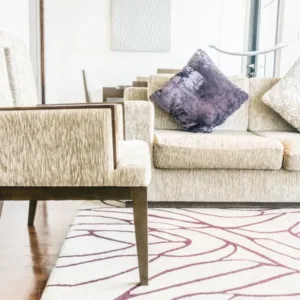
Interior design does not stop at the floor. Walls represent the majority of visible surface in any space, and how they are treated directly influences how the room is perceived — its warmth, depth, and character. Couper Croiser’s wall covering extends the brand’s philosophy to this surface: custom creations that transform an ordinary wall into a genuine design element.
Paired with a coordinated rug, wall covering creates a total visual coherence that elevates the overall space to a level of finish rarely achieved with standard products. This approach is particularly effective in entryways, boardrooms, and reception areas where first impressions matter most.
2026 interior design trends: what they mean for your rug choice
In 2026, the major directions in interior design converge around natural materials, worked textures, and nature-inspired tones — terracotta, sage, sand, khaki. These palettes pair naturally with raw materials like wood, stone, and concrete, which dominate contemporary interiors across Canada.
On the functional side, acoustic comfort has become just as important as aesthetics in both residential and commercial interior design projects. Open-concept layouts and hard flooring, dominant for the past decade, have revealed their limits when it comes to sound quality. The dense rug is making a deliberate return — not as an aesthetic compromise, but as a considered choice in a thoughtfully designed space.
Couper Croiser: a partner, not just a supplier
What sets Couper Croiser apart in Montreal’s interior design market is an approach that starts by understanding the project before proposing a product. Every mandate — residential or commercial — is treated as a collaboration: the space, its use, its identity, and its constraints are all factored into a solution built to last.
Whether you are looking to transform a living room, furnish a workspace, or shape the visual identity of a commercial location in Montreal, explore Couper Croiser’s portfolio for inspiration — or reach out directly to discuss your project.


